Understanding Mental Health Stigma in Nepal
For many people in Nepal, recognising that they are struggling is only the beginning.
The more difficult question can be deciding what to do next.
1
Will my family find out?
2
Will people think I am weak?
3
Could this affect my marriage prospects?
4
What if my colleagues discover that I am seeking therapy?
and a lot more.
These questions reflect a concern that extends beyond individual insecurity. Mental health stigma can influence how people understand emotional distress, how openly they discuss it, and how comfortable they feel seeking professional support.
In Nepal, conversations about mental health can intersect with family expectations, social acceptance, marriage, work, privacy and personal responsibility. For someone who fears judgement, even acknowledging a difficulty can feel like a risk.
Understanding mental health stigma in Nepal therefore requires more than raising awareness. It requires examining why people may recognise that they are struggling and still hesitate to seek help.
Understanding Mental Health Stigma in Nepal
Mental health stigma refers to negative attitudes, assumptions and social responses associated with mental health difficulties. It can influence how a person is treated by others and how they view themselves.
Stigma can take several forms.
- Public stigma occurs when people hold negative beliefs about those experiencing mental health difficulties. These beliefs may lead to judgement, exclusion or unfair treatment.
- Self-stigma develops when a person begins to accept negative social beliefs about mental health and applies them to themselves. They may interpret their difficulties as evidence of personal weakness or failure.
- Anticipated stigma occurs when someone expects to face judgement or rejection if they disclose their mental health concerns. Even without experiencing discrimination directly, the fear of it can discourage them from seeking support.
These experiences can overlap. A person who has heard mental health difficulties dismissed as a lack of strength may begin to hide their own struggles. Someone who expects their family to be judged may avoid discussing their concerns altogether.
Research on mental health in Nepal provides important context for understanding the need for appropriate support. The National Mental Health Survey of Nepal, 2019 to 2020 examined mental health among adults and adolescents across the country's seven provinces.
Such findings demonstrate the importance of taking mental health seriously as a public health concern. They do not, on their own, explain every reason someone may avoid seeking care. Social attitudes, personal circumstances and practical barriers also need consideration.
Why Does “What Will People Say?” Carry So Much Weight?
Family and community relationships can provide belonging, emotional support and practical assistance. They are important sources of connection for many people in Nepal.
However, the desire to maintain social acceptance can also make certain difficulties harder to discuss. Someone may worry that revealing a mental health concern will affect not only how others see them, but also how others perceive their family.
Consider a student experiencing persistent anxiety about examinations. They may fear that asking for help will be interpreted as an inability to cope with academic pressure.
A professional experiencing emotional exhaustion may worry that colleagues will question their reliability. A person facing relationship difficulties may fear that speaking to a counsellor will create misunderstandings within their family.
For someone considering marriage, concerns about disclosure may become especially difficult. They may worry that a history of mental health difficulties will influence how a potential partner or their family views them.
These are illustrative situations, not experiences shared by every Nepali person. They demonstrate how anticipated judgement can make help-seeking feel socially complicated.
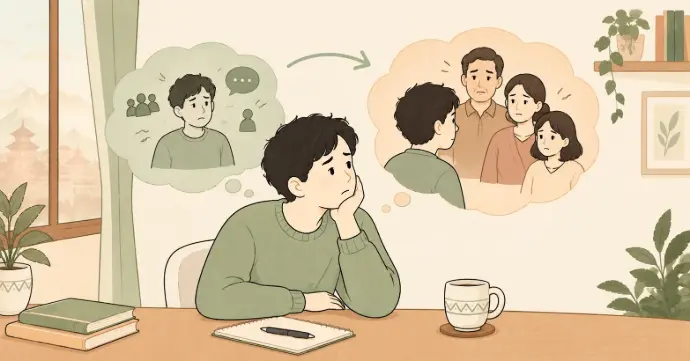
The concern may gradually shift from “What will people think about me?” to “What will people think about my family because of me?”
When a person believes that seeking help could bring embarrassment or unwanted attention to those around them, silence may appear easier than asking for support.
Reducing stigma requires recognising these concerns without reinforcing the idea that mental health difficulties should be hidden.
Family Can Be a Source of Support and Pressure
Family members may be among the first to notice changes in a person's mood, sleep, appetite, motivation, behaviour or daily functioning. Their understanding and response can influence what happens next.
A supportive family can help someone recognise that their difficulties deserve attention, explore suitable professional care and feel less alone.
However, family involvement does not always lead to help-seeking. Fear of social judgement, concerns about reputation or limited understanding of mental health may make open conversations difficult.
Sometimes, a person may be encouraged to keep their difficulties private. In other situations, their concerns may be dismissed as temporary stress or a problem they should manage independently.
It is important not to assume that every family responds in the same way. Families can experience uncertainty themselves, particularly when they do not know how mental health difficulties should be understood or addressed.
Practical education can help families respond more constructively.
Instead of saying,
“You need to be stronger,” a family member might say,
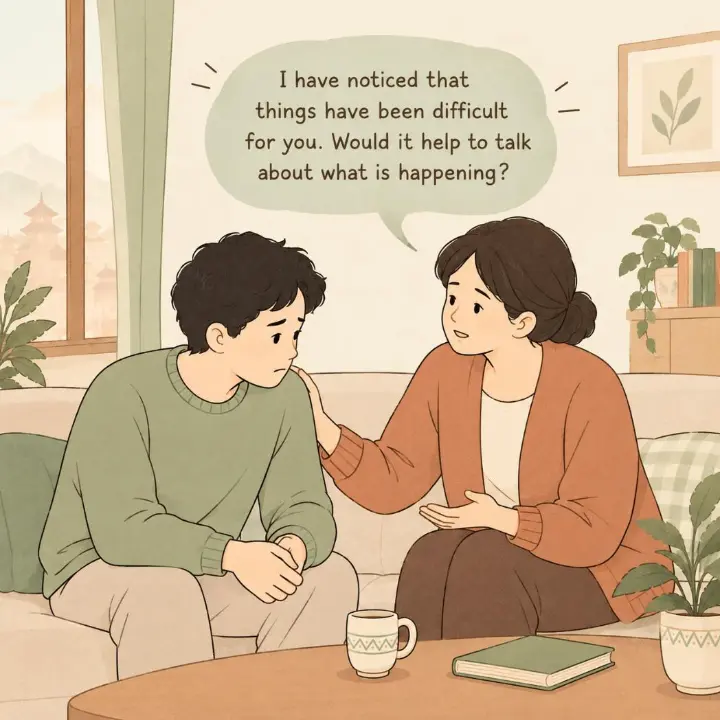
Instead of assuming that a person will improve without assistance, family members can encourage them to consider appropriate professional support.
The aim is not to assign blame. It is to make conversations about mental health safer, more respectful and more useful.
When the Pressure to Adjust Becomes a Barrier
Adjustment is often encouraged in family life, relationships, education and work. Patience, flexibility and consideration for others can help people navigate difficult circumstances.
The problem arises when adjustment becomes the automatic response to persistent emotional distress.
Someone experiencing ongoing anxiety may be told to stop worrying. A person dealing with relationship difficulties may be encouraged to tolerate the situation without discussing its impact. Someone experiencing prolonged sadness may feel expected to continue meeting every responsibility without acknowledging their distress.
These responses can make it harder to recognise when additional support may be useful.
Resilience and emotional suppression are not the same. Resilience involves recognising difficulties and finding constructive ways to respond. Suppression involves repeatedly ignoring or concealing distress because acknowledging it feels unacceptable.
A person does not need to abandon family responsibilities or personal values to take their mental health seriously. Seeking support can be one way of understanding their circumstances and deciding how to respond.
Persistent distress deserves attention, particularly when it affects sleep, concentration, relationships, work, studies or everyday functioning.
Marriage and Mental Health Stigma
Marriage can be a particularly sensitive area when people fear that mental health difficulties will affect their social acceptance or future relationships.
Someone may worry that disclosing a mental health concern will change how a potential partner or their family perceives them. Parents may also feel uncertain about discussing a family member's difficulties because they fear misunderstanding or rejection.
These concerns can encourage secrecy at a time when honest communication and appropriate support may be valuable.
Mental health difficulties should not be treated as a complete measure of someone's suitability for marriage, character, intelligence or personal worth.
A person's mental health history does not tell the whole story of their identity, relationships, abilities or future. People deserve to be treated with dignity, and decisions about relationships should not be based on stereotypes about mental illness.
Open communication can be helpful, but disclosure is personal and circumstances differ. People should not be pressured into sharing sensitive information before they feel safe to do so.
Where a relationship involves abuse, coercion or fear, safety should come first. Individual professional guidance may be more appropriate before considering joint counselling.
Why People May Delay Seeking Mental Health Support
Recognising distress and seeking professional help are two very different steps.
Someone may understand that anxiety or depression exists but interpret their own difficulties as ordinary stress. Another person may believe that professional support is intended only for people with a formal diagnosis or those experiencing a severe crisis.
Others may want to manage their concerns independently, feel uncertain about where to seek care or worry about the cost and privacy of treatment.
The National Mental Health Survey of Nepal provides national evidence on mental health and related help-seeking concerns. Its findings should be interpreted in the context of the survey period rather than presented as a measurement of current attitudes in 2026.
A common belief is that a person must reach a point of crisis before seeking professional support. This can make people postpone a conversation that might help them understand their difficulties earlier.
Professional mental health support may be worth considering when someone is experiencing relationship problems, grief, prolonged stress, emotional exhaustion, family conflict, academic pressure or a major life transition.
A formal diagnosis is not a prerequisite for asking a qualified professional for guidance. The purpose of an initial conversation can be to explore what a person is experiencing and understand what kind of support may be appropriate.
There is no single threshold that applies to everyone. The duration and severity of distress, its effect on daily life and any immediate safety concerns all matter.
Mental Health in Nepal: From Awareness to Access
Awareness is important, but it cannot resolve every barrier to care.
Access to appropriate mental health services can also depend on the availability of trained professionals, geographical distance, cost, service information and the ability to find a suitable provider.
The World Health Organization reported that in 2021 only 1 in 4 health facilities in Nepal offered mental health services. Most of those services were concentrated in major cities, leaving many rural communities under-served. The report also noted limitations in recent mental health training among staff at facilities providing these services.
These findings describe the service situation reported for 2021. They should not be interpreted as a complete picture of service availability in 2026.
For people living far from major service centres, obtaining appropriate care may involve additional travel, expense and time. Uncertainty about where to begin can create another obstacle.
Stigma can compound these practical difficulties. Someone who already struggles to identify an appropriate service may be even less likely to seek help if they fear being recognised or judged.
Nepal has continued to pursue efforts to strengthen mental health services. On 15 July 2026, the Government of Nepal and United Nations agencies launched the Joint UN Mental Health Support Programme for 2025 to 2028. The programme aims to strengthen mental health and psycho-social support systems and expand access to services across federal, provincial and local levels.
These initiatives are important because improving mental health care involves more than encouraging individuals to speak openly. It also requires services that people can identify, access and approach with confidence.
Progress requires several complementary efforts:
- Improving access to appropriately qualified mental health professionals.
- Providing understandable, culturally informed mental health education.
- Encouraging supportive family and community conversations.
- Strengthening mental health services within general healthcare.
- Making information about available services easier to find.
- Protecting privacy in accordance with applicable policies and professional responsibilities.
- Challenging stereotypes that portray help-seeking as weakness.
Awareness and access need to develop together.
Can Online Therapy Help Reduce Barriers to Care?
For some people, online mental therapy may offer a more practical way to explore mental health concerns. It can reduce the need to travel to a physical service location and allow a person to participate from a setting that is convenient for them.
This can be particularly useful for people who live far from major service centres or find it difficult to arrange travel around work, education or family responsibilities.
Online services may also feel more manageable for someone who is anxious about visiting a mental health facility. However, the degree of privacy available depends on the person's environment, the service's actual privacy practices and the circumstances of the session.
Confidentiality is an important part of counselling, but it is not absolute. Specific safety, safeguarding or legal circumstances may require disclosure in accordance with applicable professional obligations and the service's published policies. Readers should review the Saharamind Privacy Policy for information about how personal information is handled.
Online therapy is not suitable for every situation. Access to a stable connection, a private environment and an appropriate professional assessment can affect its suitability. Some circumstances require in-person assessment, additional clinical services or urgent assistance.
Digital access should therefore be understood as one part of a broader mental healthcare system, not a replacement for every form of care.
The goal is to make appropriate support easier to reach while ensuring that people receive care suited to their needs.
What Can You Do If You Are Afraid of Being Judged?
Fear of judgement does not have to disappear before you consider seeking support. You can take time to understand your concerns and decide on a manageable next step.
1. Acknowledge what you are experiencing
Try to describe your concerns in clear, specific terms. You may be experiencing persistent worry, relationship difficulties, grief, emotional exhaustion or difficulty managing everyday responsibilities.
You do not need to label yourself with a diagnosis. Recognising that something has become difficult is a useful starting point.
2. Consider how the difficulties affect your daily life
Think about how long the concerns have been affecting you and whether they are interfering with sleep, concentration, relationships, studies, work or other responsibilities.
Persistent distress, significant changes in functioning or worsening symptoms may be reasons to seek professional guidance. You do not need to wait until the situation becomes a crisis.
3. Separate social fears from your need for support
You may be worried about what your family, colleagues or community might think. Those concerns deserve consideration, but they do not automatically mean that seeking help is the wrong decision.
You can explore your options privately and make an informed decision about the support that feels appropriate.
4. Ask questions about privacy and professional qualifications
Before arranging counselling, review the service's privacy policy and ask how your information is handled. Check the professional's relevant qualifications and experience, and clarify the type of support they can provide.
Understanding these details can help you make a more informed choice.
5. Start with a manageable step
For some people, the first step may be learning about available services. For others, it may be contacting a professional, asking a trusted person for support or arranging an initial conversation.
You do not need to explain your situation to everyone around you. You can consider your options at a pace that feels manageable, while seeking urgent help promptly if your safety is at risk.
If you are in immediate danger or cannot keep yourself safe, seek urgent local help rather than waiting for a routine therapy appointment. You can also consult Saharamind's crisis and immediate support guidance. Saharamind is not an emergency or crisis-response service.
Seeking help is not a failure to cope. It can be a considered step towards understanding your circumstances and addressing difficulties with appropriate support.
Changing the Conversation Around Mental Health in Nepal
Reducing stigma can begin with the way we respond when someone tells us they are struggling.
Instead of asking, “What is wrong with you?”, we can ask, “What have you been going through?”
Instead of saying, “Everyone has problems,” we can say, “You do not have to manage everything alone.”
These changes may appear small, but they can help create conversations in which people feel heard rather than judged.
Families can encourage people to seek appropriate care without treating their difficulties as a source of shame. Educational institutions and workplaces can provide accurate information and respond to mental health concerns with respect. Communities can challenge stereotypes that discourage people from discussing their experiences.
No single conversation can remove every barrier. However, supportive responses can make it easier for people to acknowledge difficulties and explore their options.
The aim is not to reject the importance of family, community, resilience or responsibility in Nepali life. It is to ensure that these values leave room for people to say, “I am struggling,” without automatically fearing judgement.
Mental Health in Nepal: Moving from Awareness to Access
The question “What will people say?” can carry significant weight when a person is already finding life difficult. Fear of judgement may influence when they speak up, whom they trust and how comfortable they feel seeking professional care.
Addressing mental health stigma in Nepal requires more than encouraging individuals to be courageous. It involves challenging harmful assumptions, supporting families with accurate information, strengthening access to appropriate services and treating people with dignity.
It also requires recognising that mental health deserves attention before a situation becomes a crisis.
A person should not have to prove that their distress is severe enough to deserve a conversation. The decision to seek support can begin with a simple recognition that something is difficult and that understanding it with a qualified professional may help.
Looking for Professional Mental Health Support?
If you are considering counselling, Saharamind offers an online route to explore mental health support. Before arranging a session, review the available services, the relevant professional qualifications, the privacy policy and the current booking information to understand what is appropriate for your circumstances.
Visit Saharamind to explore the available options and take an informed next step.
Frequently Asked Questions
Why is mental health stigma still a concern in Nepal?
Mental health stigma can be influenced by concerns about family reputation, social acceptance, marriage, privacy and misconceptions about psychological difficulties. These concerns may discourage people from discussing their experiences or seeking professional support. Practical barriers, including service availability and uncertainty about where to seek help, can make the process more difficult.
How can family influence mental health help-seeking?
Family members can provide emotional support, practical assistance and encouragement to seek appropriate care. However, concerns about social judgement or limited understanding of mental health may also make open conversations difficult. Responding with patience, listening without blame and sharing accurate information can help create a more supportive environment.
Is seeking therapy a sign of weakness?
No. Seeking professional support is a healthcare decision, not a measure of personal strength or weakness. Counselling can provide a structured setting to explore emotional difficulties, relationships, life changes and other concerns with an appropriately qualified professional.
Can online therapy help people in Nepal?
Online therapy may make support more accessible by reducing travel requirements and offering flexibility in how sessions are arranged. Its suitability depends on the person's needs, the professional's assessment, privacy, connectivity and the available service. Urgent or complex situations may require other forms of care.
When should someone consider professional mental health support?
Consider seeking support when emotional difficulties persist, cause significant distress, affect daily functioning or relationships, or become difficult to manage independently. The appropriate timing depends on the person's circumstances and the severity of their concerns. You do not need to wait until a crisis or a formal diagnosis to ask for professional guidance.
Is mental health counselling confidential?
Confidentiality is an important part of professional counselling, but it has limits. Specific safety, safeguarding or legal circumstances may require information to be disclosed in accordance with applicable obligations and policies. Before arranging a session, review the provider's privacy policy and ask questions about how your information is handled.