Mental Health Counselling in Nepal
Mental health counselling in Nepal is a structured, confidential conversation between a trained professional and a person who is facing emotional, behavioural, or relational difficulty. Its purpose is to help that person understand what they are experiencing, help build practical coping skills, and make steady progress toward a healthier life.
Today, mental health counselling in Nepal is becoming increasingly relevant. People seek professional support for their emotional difficulties, relationship problems, stress, anxiety, grief, work-related pressure, and any other challenges affecting daily life.
Yet many people still have questions before taking the first step.
What exactly happens in counselling?
- Do you need a mental health diagnosis before seeing a counsellor?
- How do you know when normal stress has become something that needs professional attention?
- Is counselling only for people experiencing severe mental health conditions?
- Can counselling be done online in Nepal?
These questions matter because mental health counselling is not simply about talking to someone when life becomes difficult. Professional counselling provides a structured space where a trained mental health professional can help a person understand what they are experiencing. They identify patterns, develop healthier ways of responding, and work toward meaningful changes.
The Current State of Mental Health in Nepal
Nepal's National Mental Health Survey, conducted by the Nepal Health Research Council, estimated that roughly 1 in 10 adults experiences a mental disorder at some point in life.
The finding is also reproduced in this WHO document: WHO South-East Asia Regional Committee document
Access to mental health care has historically been limited by factors including availability of trained professionals, geographic access, stigma, and concentration of services in major urban areas in Nepal. WHO has reported that mental health services have been unevenly available across the country, reinforcing the importance of accessible forms of professional support.
Specialist services remain limited, and they are concentrated in major cities, particularly the Kathmandu Valley.The country has a small number of psychiatrists relative to its population, which means that counselling and psycho-social support carry a significant share of the care that people receive.
Several social conditions shape this picture. Large-scale labour migration leaves many families separated for years. Academic and career pressure on young people is considerable, and stigma still discourages many families from speaking openly about psychological distress.
These factors make accessible, culturally informed counselling an important part of public well-being.
What is mental health counselling?
Mental health counselling is a form of professional psychological support that helps people understand and work through emotional, behavioural, relational, and psychological difficulties.
A counselling session is not simply a conversation with someone who listens. A qualified mental health professional uses professional knowledge, therapeutic approaches, assessment, questioning, reflection, and evidence-informed techniques to help a person examine their experiences and work toward specific goals.
The focus can vary considerably from person to person.
For one individual, counselling may involve understanding persistent anxiety and learning how to respond to anxious thoughts. For another, it may involve processing grief after a significant loss. Someone else may seek counselling because of repeated conflict in a relationship, difficulty setting boundaries, workplace stress, loneliness, low self-esteem, or a general sense of feeling emotionally overwhelmed.
Importantly, a person does not always need a formal mental health diagnosis to seek counselling.
Counselling can be appropriate for people experiencing a diagnosable mental health condition, but it can also support people dealing with difficult life circumstances, emotional distress, personal transitions, or problems that have not reached the level of a clinical disorder.
This distinction is important in understanding mental health counselling in Nepal. Professional psychological support does not have to begin only after a person's difficulties become severe.
Mental health counselling in Nepal is not only for mental illness
One of the most persistent misconceptions surrounding counselling is that it is intended only for people with serious mental illness.
That view can make people delay seeking help.
Mental health exists on a spectrum.
- A person may function normally at work or university while privately experiencing significant anxiety.
- Someone may continue fulfilling family responsibilities while struggling with grief.
- A person can appear socially confident while experiencing low self-worth, chronic stress, or emotional exhaustion.
Counselling can provide support before these difficulties become more disruptive.
For example, someone might consider counselling after:
- Experiencing persistent stress that is difficult to manage alone
- Feeling anxious about situations that previously felt manageable
- Struggling to recover emotionally after a breakup or major life event
- Experiencing prolonged grief
- Having recurring conflict with a partner or family member
- Finding it difficult to establish personal boundaries
- Feeling emotionally exhausted despite getting enough rest
- Experiencing persistent self-criticism or low self-esteem
- Finding concentration increasingly difficult
- Avoiding social situations because of fear or discomfort
- Feeling overwhelmed by academic or professional responsibilities
- Repeatedly experiencing the same emotional or relationship patterns
- Wanting to understand oneself and one's behaviour more deeply
The purpose of counselling is not to label every difficult experience as a disorder. It is to provide appropriate professional support when a person believes that their thoughts, emotions, behaviour, relationships, or circumstances are becoming difficult to manage.
What problems can mental health counselling help with?
The appropriate form of counselling depends on the person's circumstances, concerns, goals, and level of distress.
Anxiety and excessive worry
Occasional worry is a normal human response. The concern becomes more significant when worry is persistent and that it has become difficult to control. Or begins affecting concentration, sleep, relationships, work, education, or everyday activities.
Counselling can help a person understand what triggers anxiety, recognise unhelpful thinking patterns, develop coping strategies, and gradually respond to anxiety in healthier ways.
Stress and emotional overload
Stress can arise from work, studies, financial pressures, family responsibilities, relationship difficulties, major transitions, or several pressures occurring at the same time.
Counselling can help distinguish between the external circumstances creating stress and the internal patterns that may be making it harder to cope.
This can include examining expectations, boundaries, perfectionism, avoidance, communication, workload, and emotional regulation.
Depression and persistent low mood
Persistent sadness is not the only possible sign of depression.
A person may experience loss of interest, reduced motivation, fatigue, changes in sleep or appetite, difficulty concentrating, feelings of worthlessness, hopelessness, or withdrawal from activities they previously enjoyed.
Counselling may form part of professional support for depression. The appropriate level of care depends on the person's symptoms and circumstances.
Grief and loss
Grief can follow the death of someone close, but significant loss can take many forms.
People may experience grief after the end of a relationship, loss of employment, migration, major changes in family circumstances, loss of independence, or other experiences that fundamentally alter their lives.
Counselling can provide a structured environment for processing these experiences without requiring a person to move through grief according to an artificial timeline.
Relationship difficulties
Mental health counselling can also involve interpersonal concerns.
People may seek support because they repeatedly experience arguments, difficulty communicating, insecurity, mistrust, emotional distance, difficulty establishing boundaries, or uncertainty about how to manage a relationship.
Individual counselling can help a person understand their own patterns. Couple counselling can provide a structured environment for partners to work on communication, conflict, and relationship concerns.
Low self-esteem and self-criticism
Some people seek counselling not because of one obvious crisis but because they have developed a persistent negative view of themselves.
This may appear as constant comparison with others, fear of failure, difficulty accepting compliments, excessive guilt, perfectionism, or the belief that personal worth depends on achievement.
Counselling can help a person examine the beliefs and experiences contributing to these patterns and develop a more balanced understanding of themselves.
When should you consider mental health counselling?
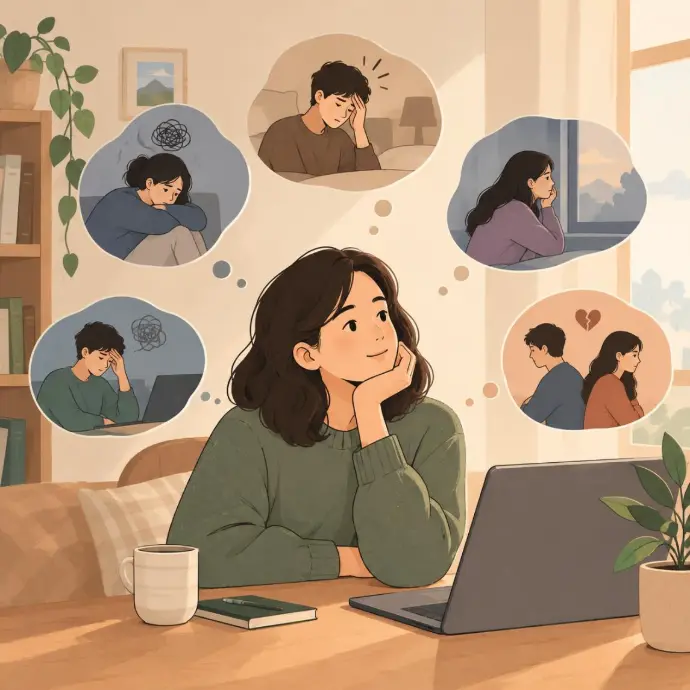
There is no single symptom that determines when a person should seek counselling. Emotional difficulty exists on a spectrum, and there is no required threshold of suffering before seeking help.
A more useful question is:
Is the difficulty continuing, becoming harder to manage, or interfering with the way I want to live?
Several signs can indicate that professional support may be worth considering.
1. The problem is lasting longer than expected
A difficult period does not necessarily mean something is wrong. However, persistent distress deserves attention.
If anxiety, sadness, irritability, grief, emotional exhaustion, or another concern continues and does not seem to be improving, speaking with a mental health professional can help clarify what is happening.
2. Your everyday functioning is changing
Pay attention to changes in areas such as:
- Sleep
- Appetite
- Concentration
- Academic performance
- Work performance
- Relationships
- Social activity
- Personal care
- Motivation
A person does not need to completely stop functioning before seeking support.
3. You keep experiencing the same problem
Repeated patterns can be particularly useful reasons to consider counselling.
For example, someone may repeatedly enter relationships with similar difficulties, repeatedly become overwhelmed by responsibilities, repeatedly avoid difficult conversations, or repeatedly respond to stress in ways they later regret.
Counselling can help identify patterns that are difficult to see from inside the experience.
4. You are coping, but coping is becoming exhausting
Some people postpone counselling because they are still managing work, family, studies, and daily responsibilities.
Functioning does not necessarily mean that a person is doing well emotionally.
If maintaining normal responsibilities requires constant emotional effort, professional support can be appropriate even when everything appears fine from the outside.
5. People close to you are noticing a change
Sometimes changes are easier for others to notice.
Friends or family members may mention that you seem withdrawn, unusually irritable, overwhelmed, anxious, or different from your usual self.
This does not automatically mean counselling is necessary, but repeated observations can be worth considering.
Do you need a diagnosis before seeing a counsellor in Nepal?
No.
You do not need to diagnose yourself before seeking mental health counselling.
In fact, attempting to determine a diagnosis based solely on internet searches can create unnecessary fear or lead to inaccurate conclusions.
A mental health professional can help assess what you are experiencing and determine what type of support may be appropriate.
For some people, counselling may focus primarily on coping with a life situation. For others, it may be part of treatment for a mental health condition. In more complex situations, a counsellor or therapist may recommend additional assessment or referral to another qualified professional.
The important point is that seeking counselling is not the same as declaring that you have a mental illness.
It can simply mean that you want professional help understanding and managing something that has become difficult.
What happens during a counselling session?
The first session can feel unfamiliar, particularly for someone who has never spoken with a mental health professional.
A typical first session may involve discussing:
- What brought you to counselling
- What you have been experiencing
- How long the concern has been present
- How it affects your daily life
- Important personal or relationship circumstances
- What you hope to change
- Your previous experiences with mental health support
- Any relevant concerns about safety or well-being
The counsellor may ask questions to understand the broader context rather than focusing only on the immediate problem.
You are also allowed to ask questions.
You can ask about the counsellor's professional background, the approach they use, how sessions generally work, confidentiality, expected frequency of sessions, and what to do if you do not feel the therapeutic relationship is a good fit.
A productive counselings relationship requires trust and a lot of comfort. It is reasonable to pay attention to how you feel during the process.
How long does mental health counselling take?
There is no universal number of sessions that works for everyone.
Some people seek counselings for a specific concern and may benefit from a relatively focused period of support. Others may require longer-term therapy because their concerns are more complex or longstanding.
The appropriate duration depends on factors such as:
- The nature of the concern
- Severity and duration of symptoms
- Personal circumstances
- Treatment goals
- Therapeutic approach
- Progress over time
- The person's preferences and needs
A common mistake is to think that counselling has failed if a problem is not resolved after one session.
The first session is often about understanding the situation and establishing a direction. Meaningful change can require time, reflection, practice, and repeated work.
How often should counselling sessions happen?
Session frequency is determined according to individual needs.
Weekly sessions are common in many forms of therapy because regular contact can provide continuity and allow people to build on previous work. In other situations, a therapist may recommend a different schedule.
The appropriate frequency can also change as therapy progresses.
For example, someone experiencing significant distress may initially require more consistent support, while another person may gradually reduce session frequency as they develop stronger coping skills and work toward their goals.
Online mental health counselling in Nepal
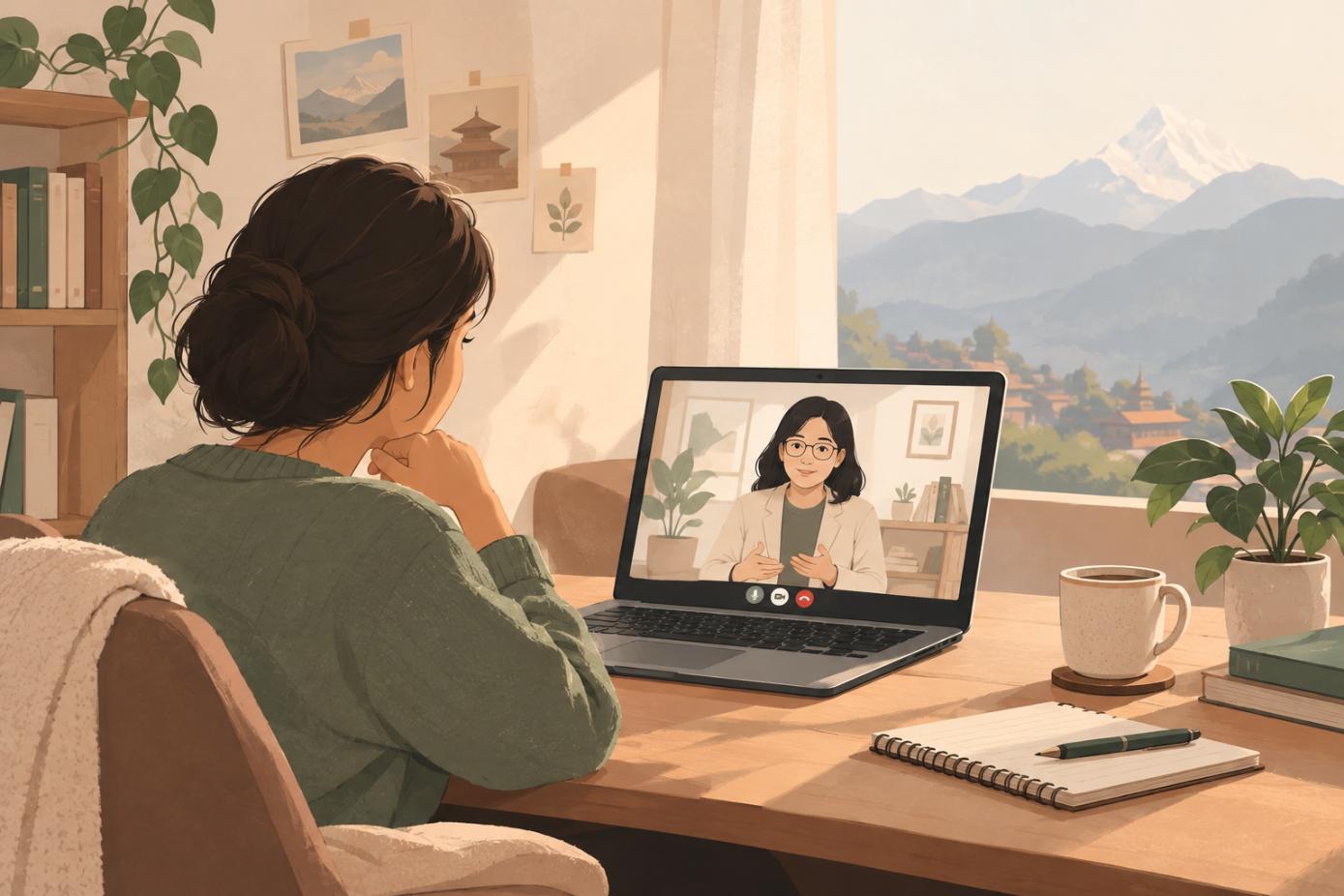
Online counselling has changed how people can access professional mental health support.
For people living outside major urban centres, people with demanding schedules, Nepali people living away from their usual support networks, or individuals who feel more comfortable beginning therapy from a familiar environment, online sessions can reduce some practical barriers.
WHO has identified gaps in the distribution of mental health services in Nepal, with services historically concentrated in major cities.
Online mental health counselling in Nepal can make professional support more accessible by removing the need to travel to a physical clinic for every session.
The suitability of online therapy depends on the person's needs, the type of concern, access to a private environment, internet connectivity, and the professional's assessment.
Is online counselling confidential?
Confidentiality is a fundamental part of professional mental health care.
When considering online mental health counselling in Nepal, it is reasonable to ask how sessions are conducted, how personal information is handled, how communication is protected, and what confidentiality policies apply.
The practical environment matters as well.
A person attending an online session should ideally have a private place where they can speak without being overheard. Using headphones can also provide additional privacy.
Saharamind states that its platform connects users with licensed mental health professionals and provides therapy through online communication. Its platform describes secure and confidential communication as part of its approach to protecting users' privacy.
What should you look for when choosing mental health counselling in Nepal?
Finding a counsellor is not simply about choosing the first available appointment.
Several factors deserve consideration.
- Professional qualifications
Look for information about the professional's training, qualifications, experience, and areas of practice.
Different professionals may have different educational backgrounds and areas of expertise.
- Experience with your concern
A professional who regularly works with anxiety may approach your needs differently from someone who primarily works with relationship concerns, trauma, family difficulties, or another area.
Consider whether the professional's experience is relevant to what you want to address.
- Therapeutic approach
Different therapists use different therapeutic approaches.
You do not need to understand every psychological theory before starting counselling, but it can be useful to ask what approach a therapist generally uses and how that approach relates to your goals.
- Accessibility
Practical factors matter.
Consider location, scheduling, session format, technology requirements, language preferences, session frequency, and cost.
A form of counselling that is theoretically suitable but practically impossible to maintain may not be useful in the long term.
- Comfort and therapeutic fit
The relationship between client and therapist matters.
You should feel able to discuss your concerns without being unnecessarily judged or dismissed.
A therapist does not need to agree with everything you say. Professional counselling can involve challenging assumptions and encouraging you to look at situations differently. However, the process should remain respectful and professionally conducted.
How much does mental health counselling cost in Nepal?
The cost of mental health counselling varies depending on the provider, professional qualifications, session type, format, and service structure.
Saharamind offers



options through its online platform, with different plans depending on the number of sessions and type of support required.
Why access to counselling matters in Nepal
The need for accessible mental health support in Nepal exists within a broader national mental health context.
Nepal has established policy and legal frameworks recognising mental health as part of health services. The Public Health Service Act includes mental health within basic health services, while national strategies have aimed to expand mental health care and integrate it into primary health care.
At the same time, access has not been evenly distributed.
WHO has highlighted shortages in mental health service availability and trained personnel, particularly outside major urban areas.
More recently, the Government of Nepal and United Nations agencies launched a Joint UN Mental Health Support Programme (2025–2028) intended to strengthen mental and psycho-social support systems and expand access to services across federal, provincial, and local levels.
This makes the discussion around mental health counselling in Nepal larger than the question of individual treatment. Access, affordability, professional availability, confidentiality, stigma, and the ability to seek support without travelling long distances all influence how people receive care.
Counselling does not have to begin with a crisis
One of the most useful ways to think about counselling is as a form of professional support rather than an emergency measure.
- You do not have to wait until you can no longer work, study, maintain relationships, or manage daily responsibilities.
- You can seek counselling because something has been bothering you for months.
- You can seek it because a relationship keeps repeating the same pattern.
- You can seek it because you are struggling to understand your emotions.
- You can seek it because a major life change has left you uncertain about what comes next.
- You can also seek it simply because you want professional guidance in understanding yourself better.
The decision to speak with a mental health professional does not mean that you are weak or incapable of handling life. It means you have decided that having appropriate professional support may be useful.
How to take the first step toward counselling in Nepal
If you are considering counselling, you do not need to have everything figured out before your first appointment.
Start by identifying what has been difficult.
You might write down:
- What has been bothering you
- When you first noticed it
- How it affects your daily life
- What you have already tried
- What you would like to change
- Any questions you have about counselling
You can then look for a qualified professional whose experience and approach fit your needs.
For people looking for online mental health counselling in Nepal, Saharamind provides a platform for connecting with licensed therapists and finding therapy based on individual needs and preferences. The platform allows users to share their concerns, receive a therapist recommendation, select a plan, and schedule a session online.
The goal is not to find the perfect words before starting therapy.
The goal is to begin a professional conversation about what you are experiencing.
Frequently Asked Questions About Mental Health Counselling in Nepal
Is mental health counselling only for people with mental illness?
No. Counselling can support people experiencing diagnosed mental health conditions as well as people dealing with stress, grief, relationship difficulties, life transitions, self-esteem concerns, and other emotional challenges.
Can I see a counsellor even if I am not sure what is wrong?
Yes. You do not need to arrive with a diagnosis. Explaining what you have been experiencing can give the professional a starting point for understanding your concerns.
Is online counselling available in Nepal?
Yes. Online therapy allows people in Nepal to connect with mental health professionals without attending every session at a physical location. The suitability of online therapy depends on the individual's needs and circumstances.
How do I know if I need counselling?
Consider counselling if emotional or psychological difficulties are persistent, interfering with your daily life, becoming increasingly difficult to manage, or repeatedly affecting your relationships and functioning.
How many counselling sessions will I need?
There is no standard number. The duration depends on your concerns, goals, progress, therapeutic approach, and individual circumstances.
Is counselling confidential?
Professional counselling generally involves confidentiality, subject to applicable professional and legal limitations. When choosing an online service, review its privacy and confidentiality practices before beginning.
Can counselling help with relationship problems?
Yes. Individual counselling can help people understand their own relationship patterns, communication, emotional responses, and boundaries. Couple counselling can provide structured support for partners working through relationship concerns.
Is counselling the same as talking to a friend?
No. Friends can provide valuable emotional support, but counselling is a professional service. A trained mental health professional brings structured therapeutic knowledge and techniques to the process.
Can counselling replace psychiatric treatment?
Not always. Counselling and psychiatric treatment address different aspects of mental health. Some people may need counselling, medication, or a combination of services depending on their circumstances.
Final thoughts
Mental health counselling in Nepal is not simply a service for people who have reached a breaking point.
It can be a structured form of professional support for people trying to understand anxiety, manage stress, process grief, improve relationships, develop healthier patterns, or navigate difficult periods of life.
The most important consideration is not finding a label for what you are experiencing. It is recognising when you may benefit from support and finding an appropriately qualified professional who can provide it.
For those looking for accessible online therapy in Nepal, Saharamind offers a way to connect with licensed therapists and begin the process online. You can learn about the available therapy options and determine what type of support may fit your needs.
Seeking counselling does not require you to have everything figured out.
Sometimes, the first step is simply having a place to begin the conversation.